Our research
Structural Biology of Allergens
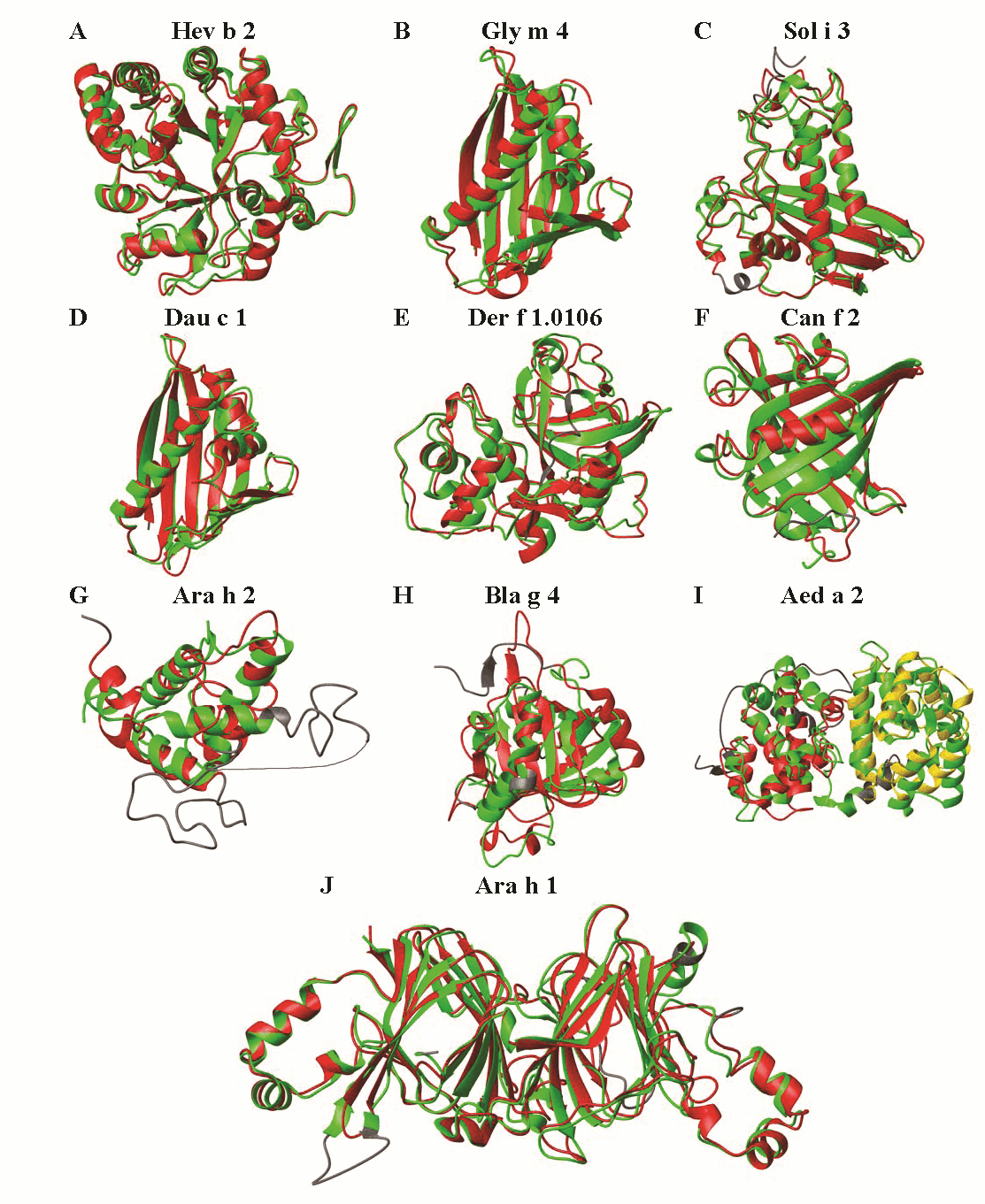
Understanding the characteristics of allergenic proteins is important for guiding patient treatment, reducing allergens in food and air, and designing hypoallergenic proteins for immunotherapy. Our group established the Structural Database of Allergenic Proteins (SDAP) providing access to sequences, structures, and IgE epitopes of over 900 allergens. For commercial information about SDAP, please click here to download the document .
Envelope Proteins of Alpha & Filo Viruses
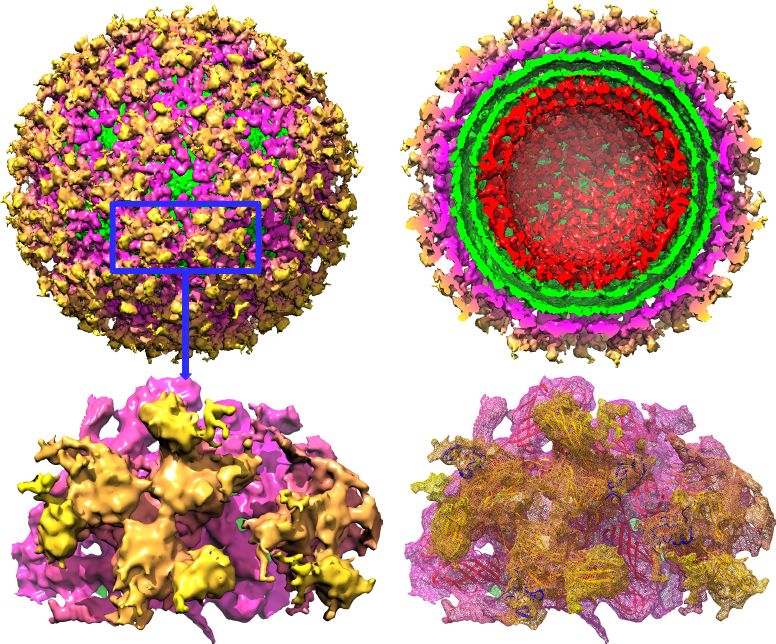
We focus on detection and prediction of antigenic sites of envelope proteins of encephalitic alphaviruses (EEEV, WEEV, VEEV) and Ebola virus species. Results impact design of new vaccines with broad-based protection.
Bioinformatics Tools for Epitope Prediction
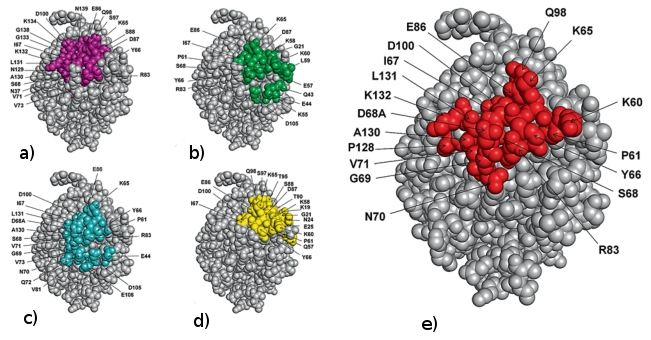
We developed EpiSearch for automated conformational epitope prediction from phage display experiments, and InterProSurf for predicting surface interaction sites.
Computational Methods for Protein Toxins
We provide novel, validated methods to rapidly assess the similarity of novel proteins to known protein toxins, supporting biotechnology companies in evaluating potential adverse effects of engineered proteins.
Quick access
SDAP Database
Browse the Structural Database of Allergenic Proteins — sequences, 3D structures, and IgE epitopes of over 900 allergens.
Web Servers
Access our suite of bioinformatics tools: InterProSurf, EpiSearch, GetArea, AllergenPred, Cross-React, and more.
Publications
Browse our complete list of peer-reviewed research publications from the Braun Research Lab.
Teaching
BMB 6206 — Computer Modeling of Macromolecular Structure and Function
Werner Braun & Surendra Negi · 2016 · Computational Biology Facility, Research Building 6, 5th Floor, Room 5.416A
A 15-week course introducing students to fundamental concepts of data representations, data formats, and software tools for search, retrieval, and analysis of amino acid and nucleotide sequences, including systems biology and Next Generation Sequencing. Covers BLAST, FASTA, ClustalW, secondary and tertiary structure prediction, and the Protein Data Bank.